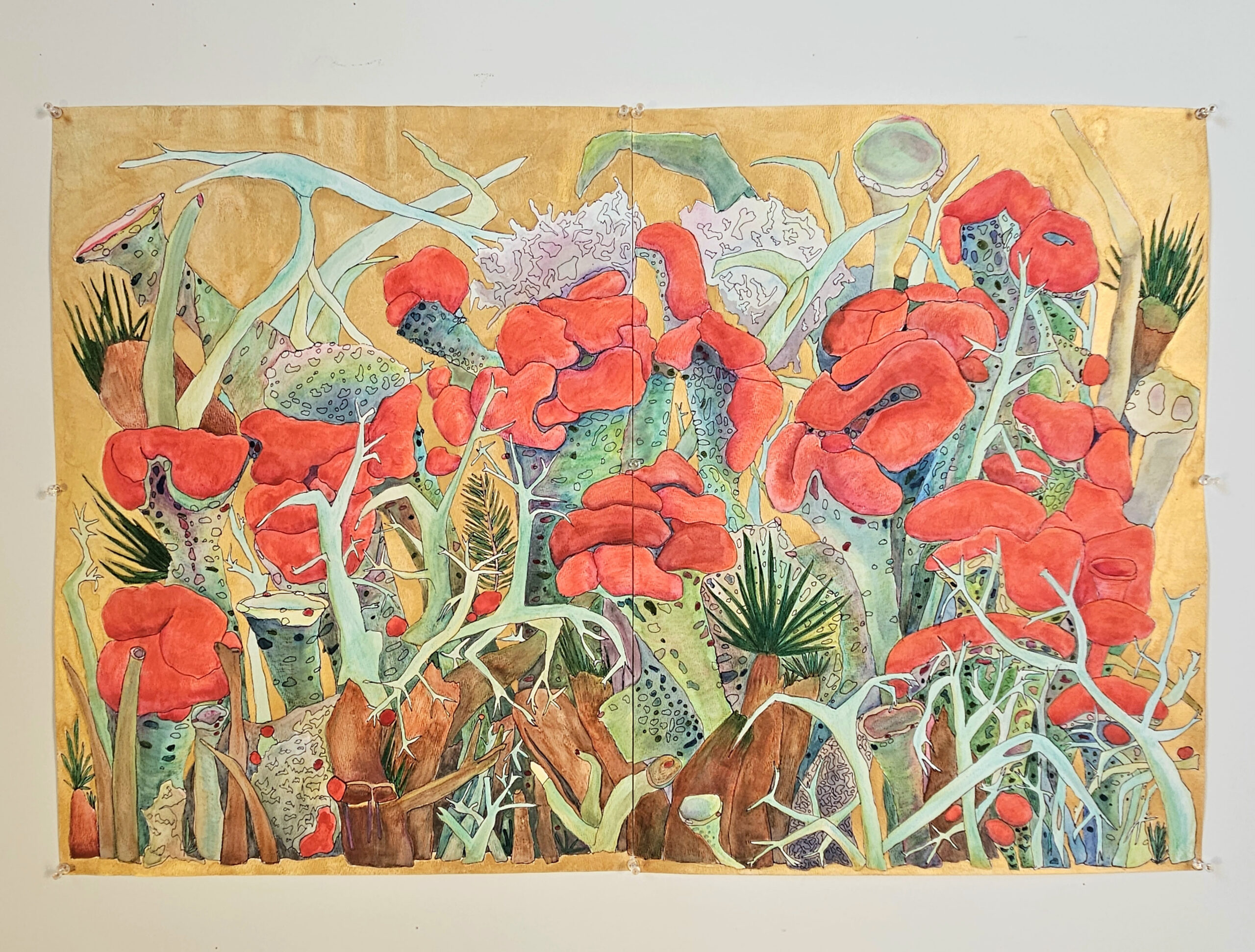
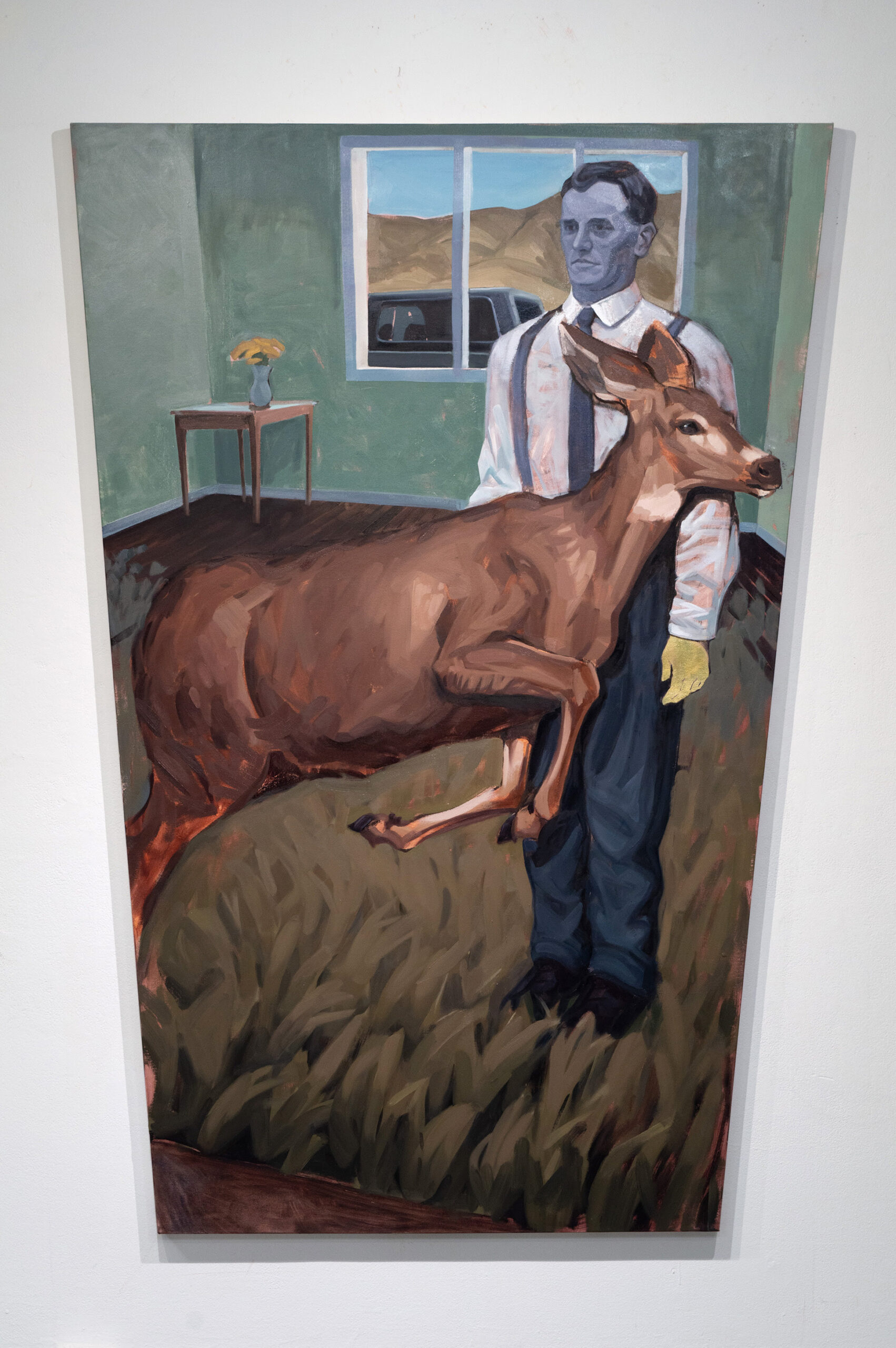
Opening Reception: Friday, August 7, 6:00 – 8:00 p.m.
Curator Talk: Wednesday, August 26, 6:00 – 7:00 p.m.
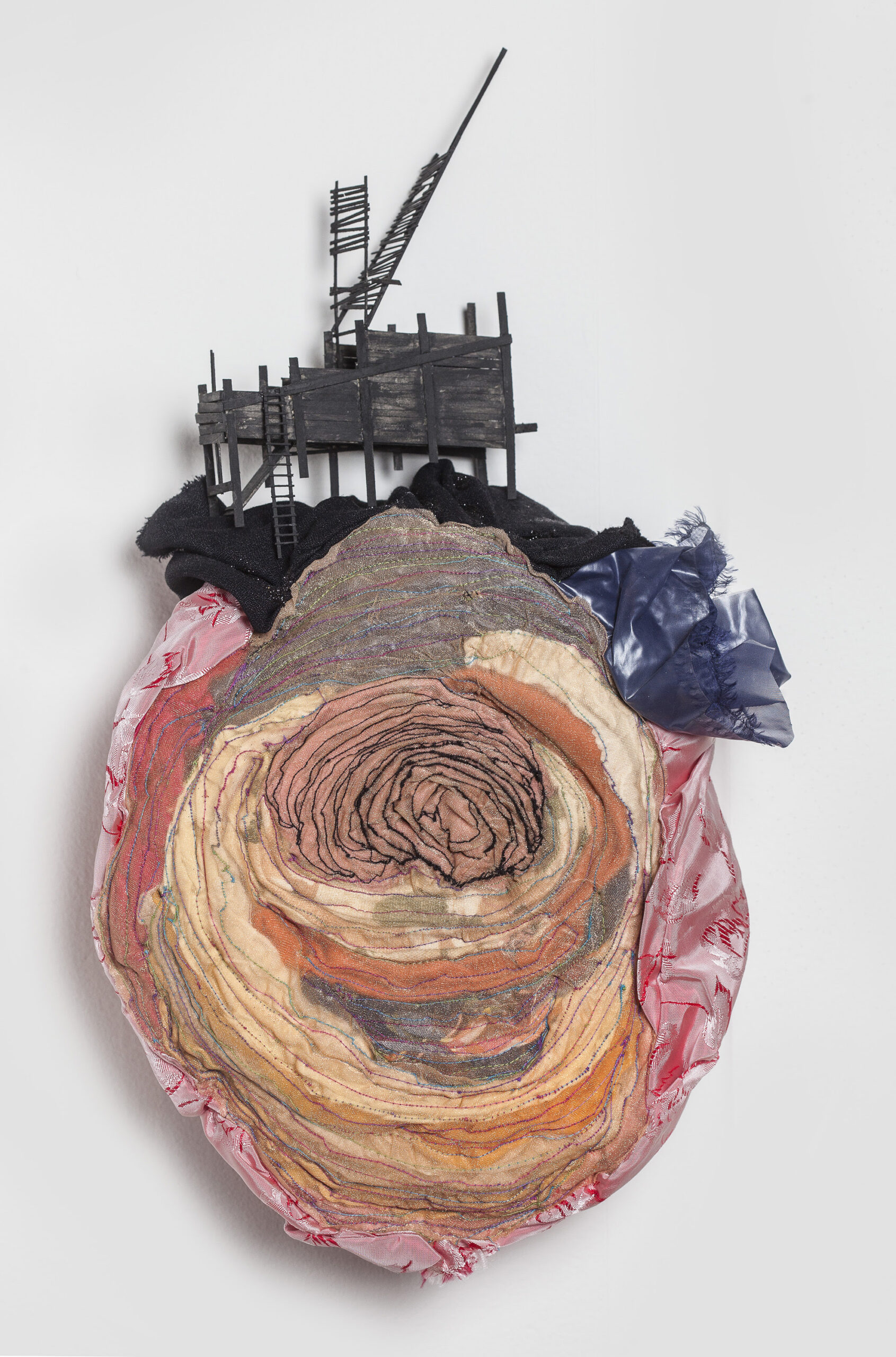
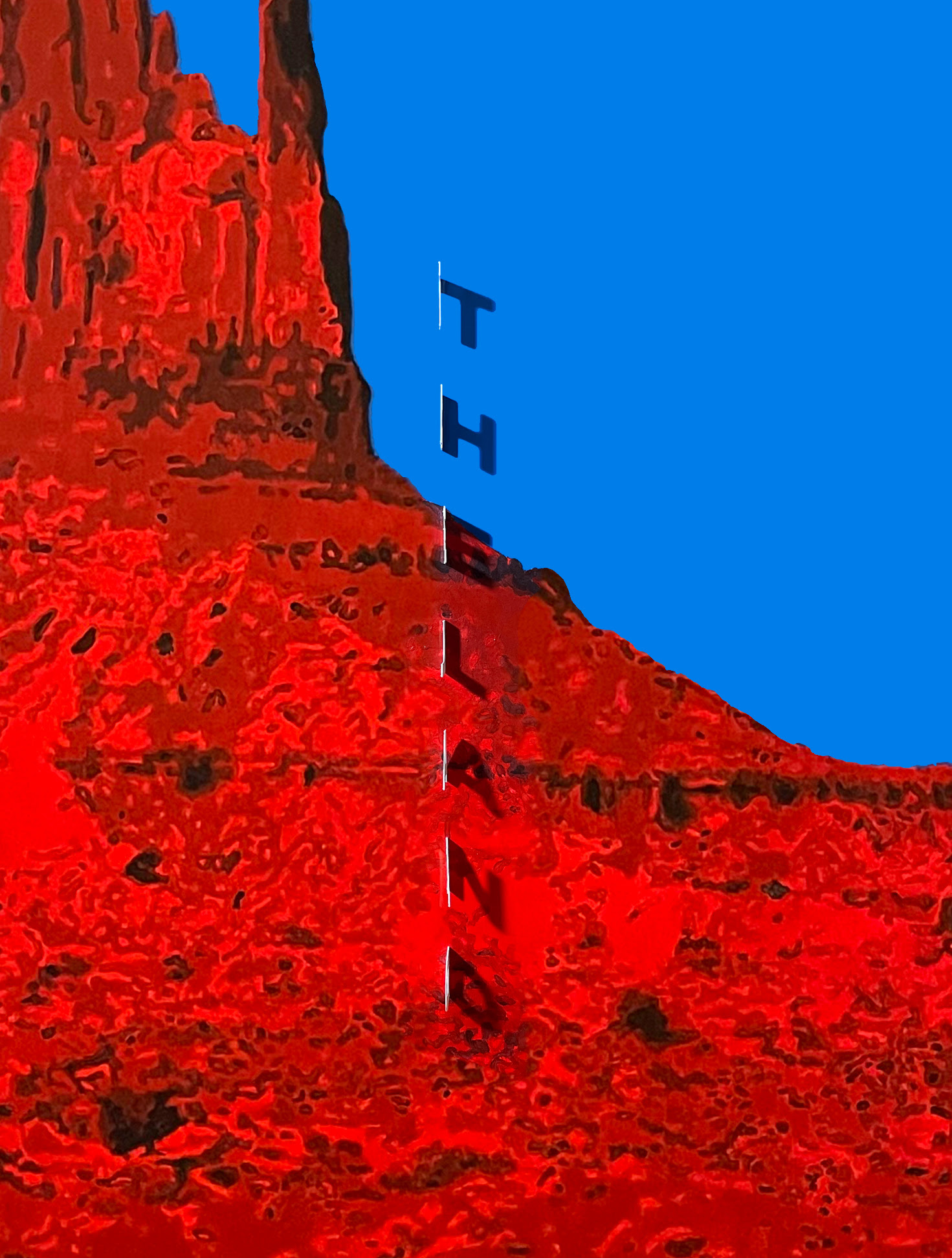
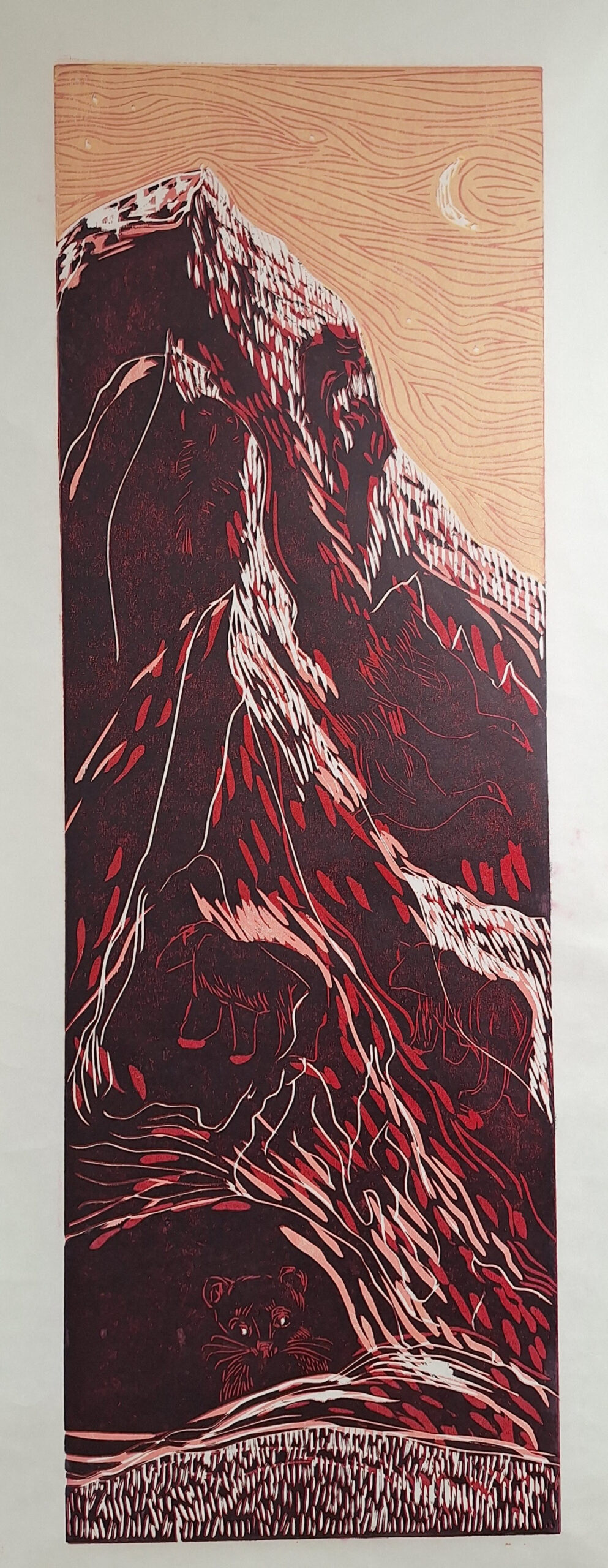
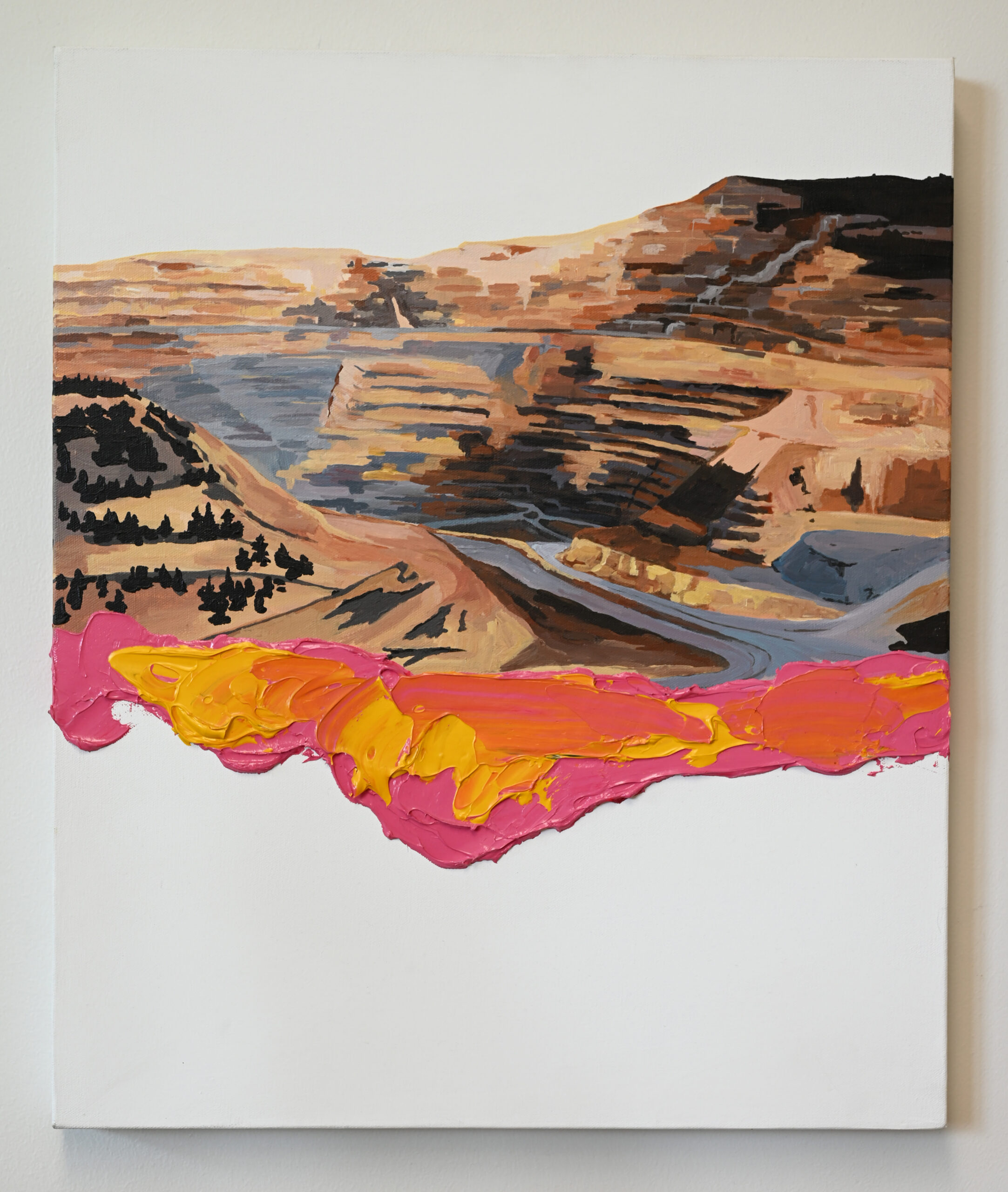
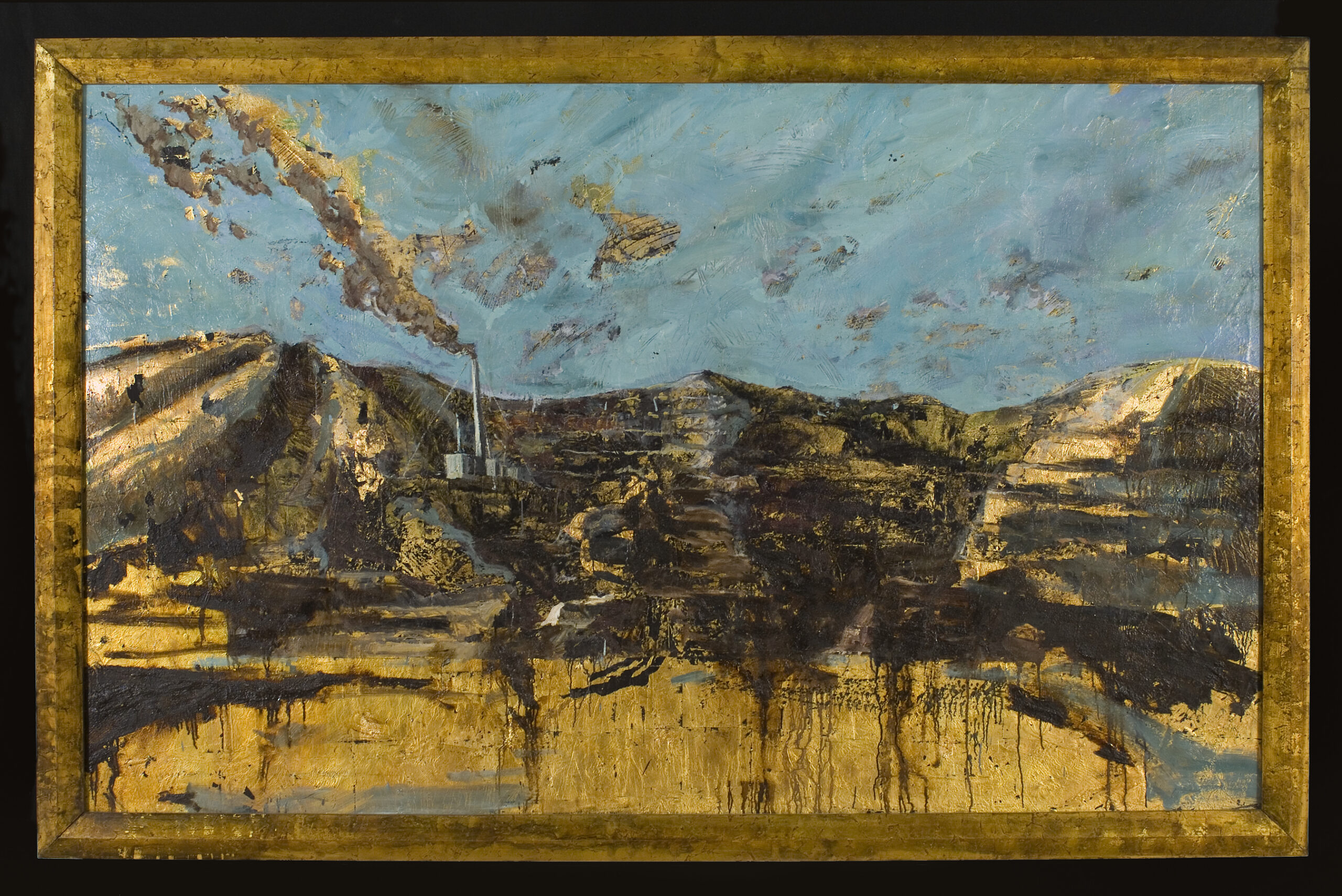
This is a juried group exhibition inspired by the painting in the Holter Permanent Collection, Gold Sunlight, by Nolan Salix. His painting is of the Golden Sunlight Mine located just outside of Whitehall, Montana.
The first claims on the mine were staked by A.H. Hedley in 1890. After Hedley’s initial claims, ownership fluctuated for many years, as individuals and companies struggled to find an economically viable way to extract gold from the mineral-rich land. In 1935, the infamous Anaconda Company even chose not to buy the land when given the opportunity due to its unprofitable status. Eventually, Placer U.S. acquired it after several ownership changes. The mine was officially established in 1970. In 1983, a landslide caused a 7.5-month shutdown. During this event, 19 million gallons of cyanide solution leaked after a retaining wall at a tailings pond failed. This contamination affected the Jefferson River alluvium, as well as three domestic wells and one veterinary well, leading neighboring landowners to sue Placer U.S. Six years later, groundwater contamination persisted, and by 2011, the full extent remained unknown. Throughout mining operations, leaks and spills occurred frequently. For example, in 1986, a pipe fitting split and discharged 2,000 gallons of cyanide. In 1987, 60 pounds of cyanide spilled in a slurry containing 40 tons of liquid and 40 tons of solids. A pipeline leak in 1988 released 15,000 gallons of mine waste. In 1989, a blockage in a pipeline caused acid mine drainage to spill onto the ground. Monitoring wells in 1992 showed cyanide levels exceeding the safety standard of 0.2 ppm, with eastside pumpback wells at 250-300 ppm and south pumpback wells at 100 ppm. In 1993, a 7-gallon-per-minute seep was found below the tailings impoundment, with cyanide levels at 0.6 ppm. In 1994, 48.3 tons of tailings spilled due to leaks, and state agencies were not notified for months. A notice of noncompliance was issued to the company for failing to notify the authorities and for failing to perform the required cleanup procedures. The mine closed in 2019 but reopened in 2022 with promises of “environmental stewardship,” “reclamation and ecological recovery,” and “AI integration to improve efficiency.”
This exhibition aims to highlight the duality of Montana and the broader western U.S. landscape. Known as “God’s Country” and “The Last Best Place,” Montana has the highest number of Superfund sites in the country—19, including the Smelter Site in East Helena. Superfund sites are polluted locations designated by the EPA for long-term hazardous waste cleanup. Responsibility for funding cleanup lies with the site owners, which is often a reason for delays. The contradictions are stark; as deregulation advances, confidence diminishes in the belief that extractive industries will prioritize safety and environmental health. Recently, the EPA launched the “greatest day of deregulation in U.S. history,” rolling back 31 major climate and energy regulations. Despite the region’s reputation as one of the greatest examples of natural beauty in the world, protecting and shepherding it seems increasingly elusive as the years pass.
The title of this exhibition, Seek the Sun, is intended as a mantra of encouragement, reminding viewers that a better world is possible and urging them to seek beauty even when it feels like there is none.
“I am inspired by the duality of this landscape. This monumental sculpted mountain is created by man’s lust for the beauty of gold and our dependency on efficient metals. This landscape is the honest result of our consumer culture. The gold is deemed more valuable than this intact landscape. As I begin this painting at this site (plein air), just east of the mine, I see the sunrise light up this mountain, revealing the mined terraces and dramatic forms. I love being here, seeing this landscape, observing this site….
A 1983 incident involved the failure of a retaining wall at a tailings impoundment, resulting in the spill of millions of gallons of cyanide and heavy metals-laced water, contaminating groundwater and nearby farms.The tar-encaustic paint under the gold leaf represents these materials and their effect on the biotic community.” – Nolan Salix
Nolan Salix
Alexia Duncan
Michelle Northey
Christina Barbachano
Christel Bjerke

This exhibition is sponsored by the Andy Warhol Foundation for the Visual Arts; Montana Arts Council, a state agency funded by the State of Montana; the National Endowment for the Arts; and additional support from coal tax placed into Montana’s Cultural and Aesthetic Projects Trust Fund.