Figuring Frank

Frank Hyder
What unifies the exhibition is a profound attentiveness to the rhythms of the artist’s daily experience, rendered with clarity, warmth, and conviction.

Frank Hyder:

Figuring Frank

BAUCUS GALLERY, October 16 - December 31, 2026

Opening Reception: Friday, October 16, 6:00 – 8:00 p.m.

“Turn Back Time” Artist Talk: Saturday, October 17, 1:00 – 3:00 p.m.

Curator Talk: Wednesday, December 16, 6:00 – 7:00 p.m.


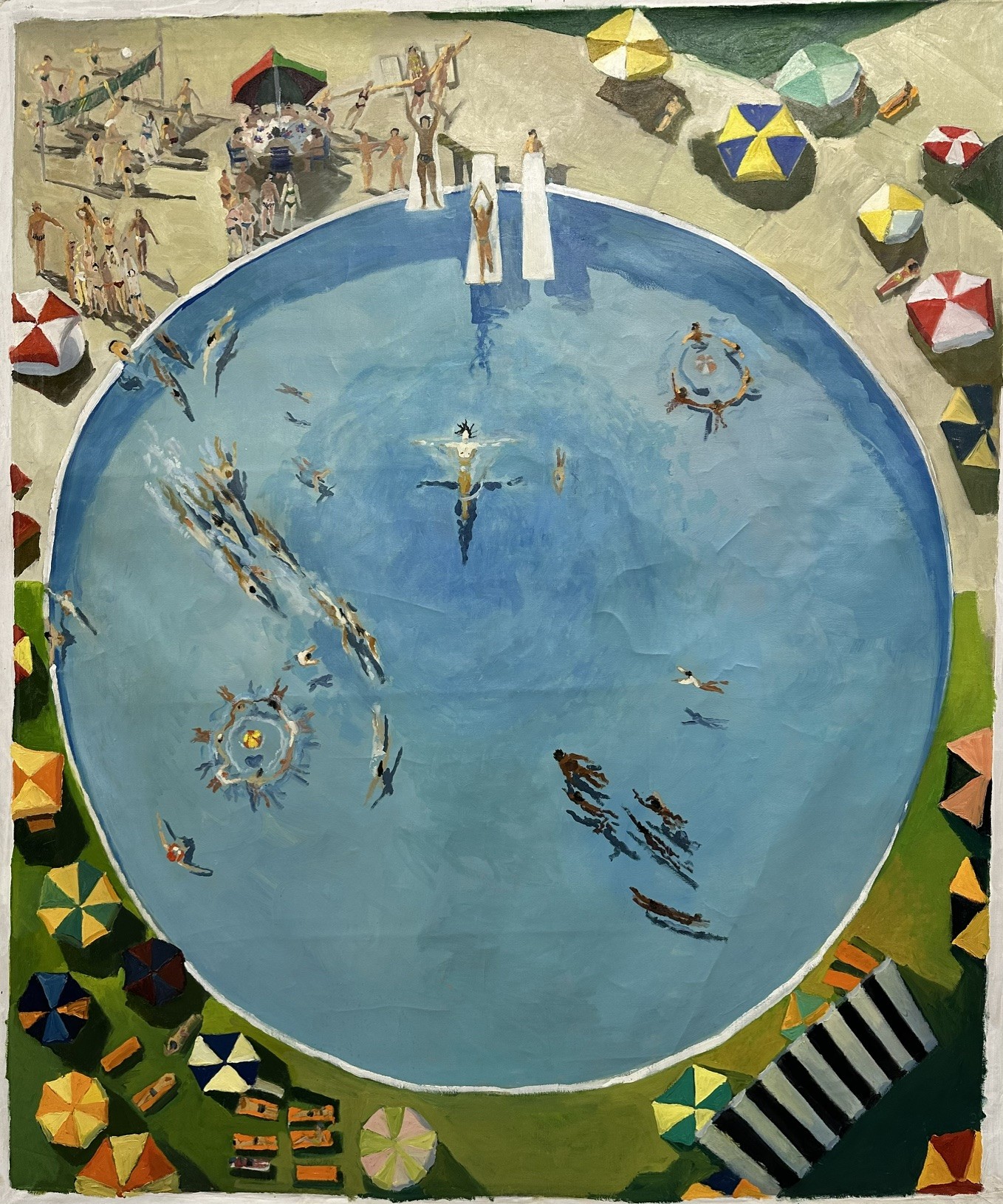
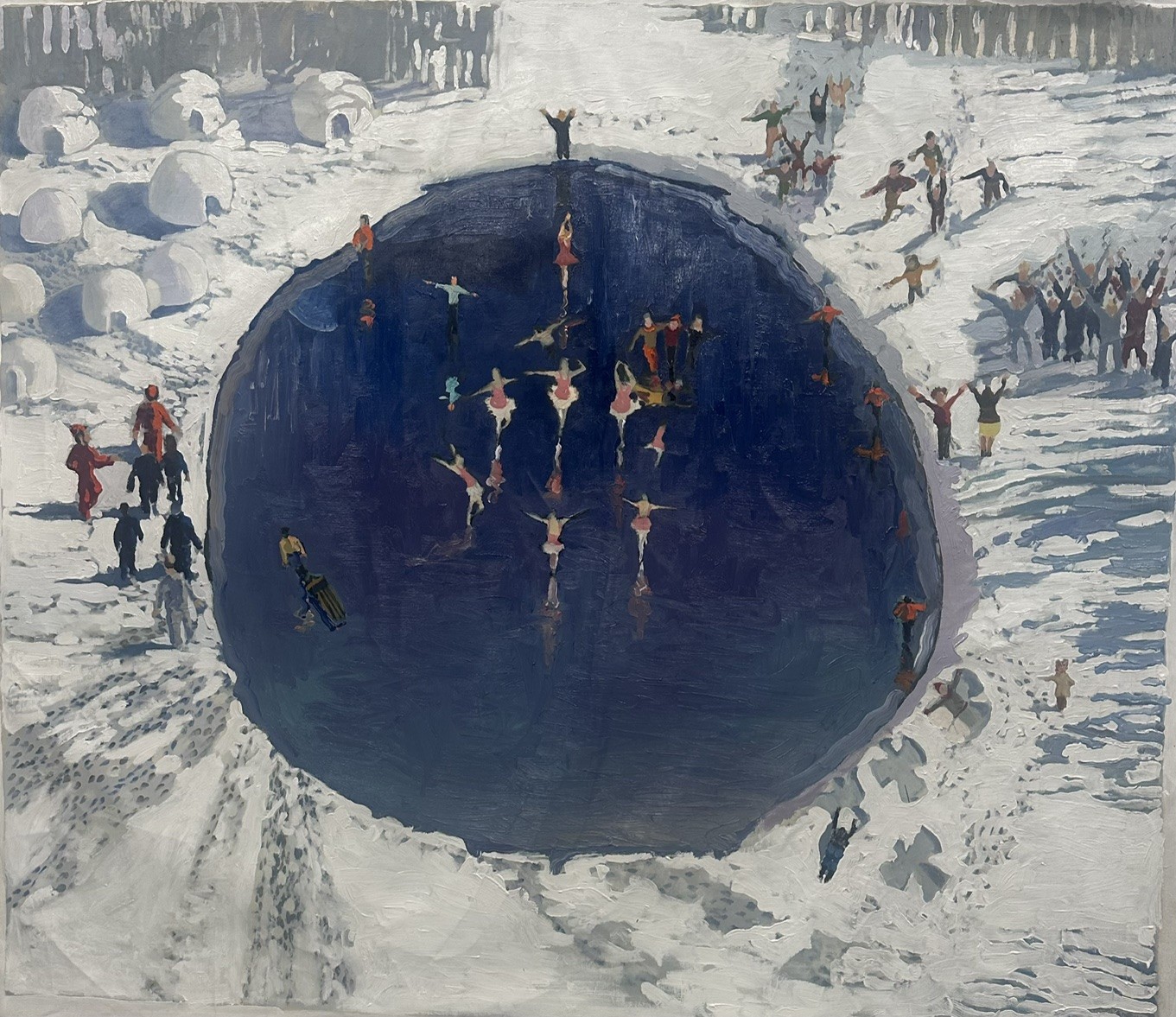
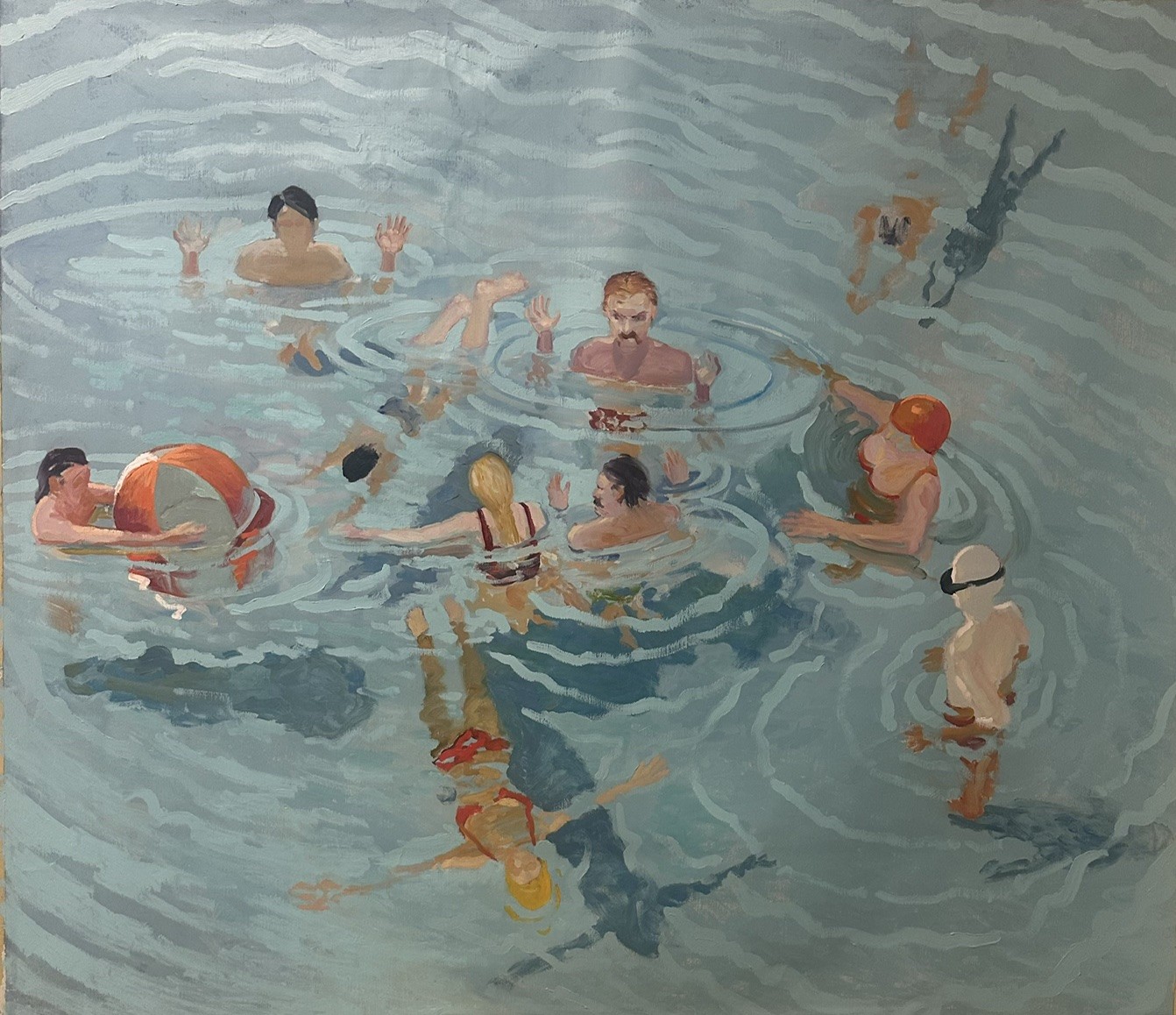
The paintings Frank Hyder produced in the early 1970s reveal an artist arriving at painterly maturity with striking confidence and clarity. Created at a moment of intense intellectual exchange, these works reflect Hyder’s deep engagement with color, structure, and observation, while resisting stylistic allegiance to any single school or mentor. The paintings balance immediacy and restraint: figures, interiors, and everyday scenes are rendered with a sensitivity to light and surface that feels intuitive and rigorously considered. Far from preliminary or exploratory, these works assert a fully formed artistic voice, one grounded in attention to the quotidian and a quiet insistence on painting as a site of sustained looking. Long unseen, the 1970s paintings stand as a rare and compelling record of an artist’s origins, offering fresh insight into the foundations of Hyder’s art practice.

Hyder is an American artist whose work explores color, light, and cultural symbolism across painting, sculpture, woodcut, and installation. He earned a BFA from the Maryland Institute College of Art and attended the Skowhegan School of Painting and Sculpture. Recognized early as an exceptionally gifted painter, Hyder was invited, while still a junior at MICA, to study with artists central to the New York art world at the University of Pennsylvania, including Alex Katz, Fairfield Porter, Elaine de Kooning, Neil Welliver, Alfred Leslie, Janet Fish, William Bailey, Paul Resika, Yvonne Jacquette, James Hennessey, and Paul Georges. He later received his MFA from the University of Pennsylvania. These artists, many shaped by direct connections to Bauhaus émigrés, represented a broad and vital range of approaches that challenged Hyder to sharpen his own voice. Rather than emulate their methods, Hyder sought to deepen his understanding of painting itself. While traces of these influences are visible, the works assert a confident and singular artistic identity from the outset.

Shortly after completing his studies, Hyder shifted his focus away from painting toward drawing and wood carving, ultimately devoting himself to sculpture, a medium that he became known for. He is today widely known for his large-scale sculptural works and public commissions.

The rediscovery of Hyder’s early paintings prompted a return to the medium that first anchored his practice. Over the past year, he has produced nearly one hundred new works, including paintings on canvas and dimensional painted constructions cut from plywood, effectively merging painting with the sculptural language that has defined much of his career. The works are figurative and largely observational, depicting people he knows, intimate domestic scenes, swimmers, animals, and moments drawn from everyday life. Across both historical and recent works, Hyder’s handling of color is vibrant, expressive, and assured. What unifies the exhibition is a profound attentiveness to the rhythms of the artist’s daily experience, rendered with clarity, warmth, and conviction.

Artist Biography

Frank Hyder has participated in more than 200 group shows and over 100 solo exhibitions throughout the Americas, Asia, and Europe, including 10 individual exhibitions in New York City. Solo museum exhibitions in Venezuela at the Museum of Modern Art Caracas, Museo Jacobo Borges, Museum of Modern Art Zulia, Museo Universidad de Los Andes and Museum of Modern Art Coro. Other solo museum exhibitions: Pennsylvania Academy of Fine Art, Carnegie Museum CA, La Salle Museum of Art, National Museum of Catholic Art and History and The Noyes Museum.

He is one of ten artists whose heroic inflatables formed the “Giants in the City” exhibition in Miami during Art Basel Miami. He also had a six-month exhibition in the Philadelphia Airport. He was among 80 artists selected as part of an exhibit of graduates of the Maryland Institute College of Art showcasing 160 years. His “The Janis Project” exhibited at the Museum of the Pennsylvania Academy of Art, the Art Students League of New York City and James A. Michener Museum in Doylestown, PA.

He was selected to create a piece in the Pennsylvania Convention Center, was selected to create a ceramic installation in Oxnard, California and was a finalist for the Oregon Department of Transportation building and the Penn Treaty Park I-95 Access Project. He has created numerous murals with the prestigious Mural Arts Program of Philadelphia. He also created an interactive urban project with the Chicago Loop Authority, complex textures, and the subtle play of light, designed to evoke emotions and provoke thought.

He was chairman of Fine Arts and faculty member at the Moore College of Art and Design and faculty member at the University of Pennsylvania Graduate School of Fine Arts. His works have been featured in Color in Contemporary Painting, The Art of Watercolor, The Song of the City, and Artist Homes and Studios. His works have been reviewed in the New York Times, Los Angeles Times, San Francisco Examiner, ArtNews and Art in America.

With a career spanning several decades, Frank has worked in different mediums, always pushing the boundaries of his craft. His goal is to use colors, forms, and textures to speak to his audience, encouraging reflection and dialogue. He finds joy in sharing his works with the world, making art that transcends cultural and geographical boundaries.

My creative process is an exploration of both structure and freedom. I begin with a rough concept, allowing it to evolve on the canvas in an organic way. I use a variety of mediums—acrylic, oil, mixed media—depending on the emotion I wish to convey.
This exhibition is sponsored by the Montana Arts Council, a state agency funded by the State of Montana; the National Endowment for the Arts; and additional support from coal tax placed into Montana’s Cultural and Aesthetic Projects Trust Fund.
Support the Holter

Committed to showcasing legacy, established and emerging artists, we aim to be a vibrant hub that celebrates the power of art, in all its forms and expressions, to transform lives.

Love what we do? Consider donating!